The problem
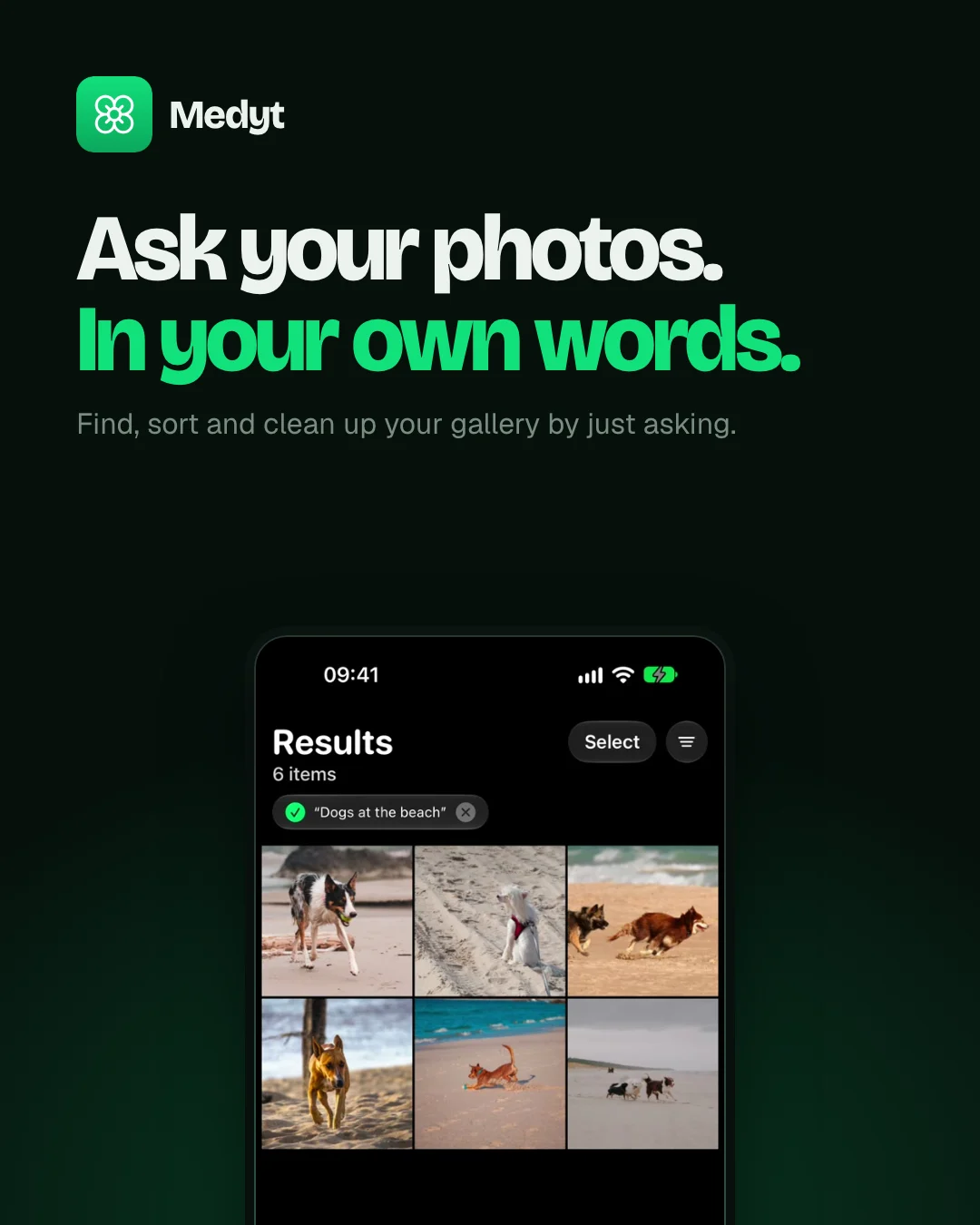
My phone has thousands of photos. Somewhere in there is the picture of a friend's dog at the beach, last summer. I know it exists. I can't find it.
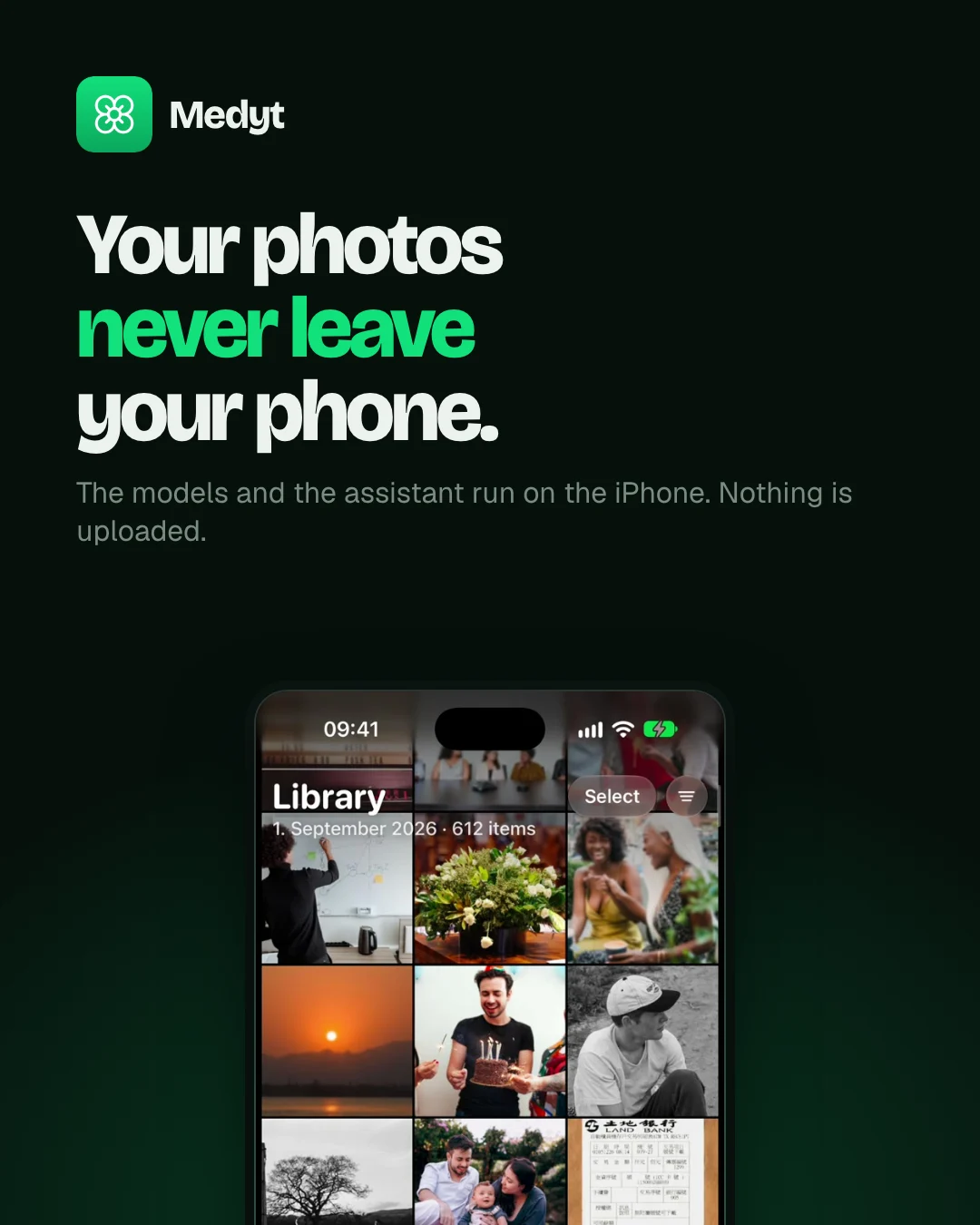
The obvious fix is a cloud assistant: upload the library, ask in words. It works, and it also means handing your whole life, faces of your family included, to someone else's server. I didn't want that, and I suspect most people don't either once they stop and think about it.
The idea
What if the assistant's brain never left the phone?
Medyt is an iPhone app you talk to. "Photos of Bruno at the beach." "Diego and Sofia together in the park." "The blurry ones." It finds them, and then it can act: group them, clean up duplicates, put the rejects in a review folder. It asks before it changes anything, and "actually, put that back" undoes the last step.
The demo above is 74 seconds. Watch it first, the rest of this page is how it works.
How it works, without the jargon
Two things have to happen for a question like that to work.
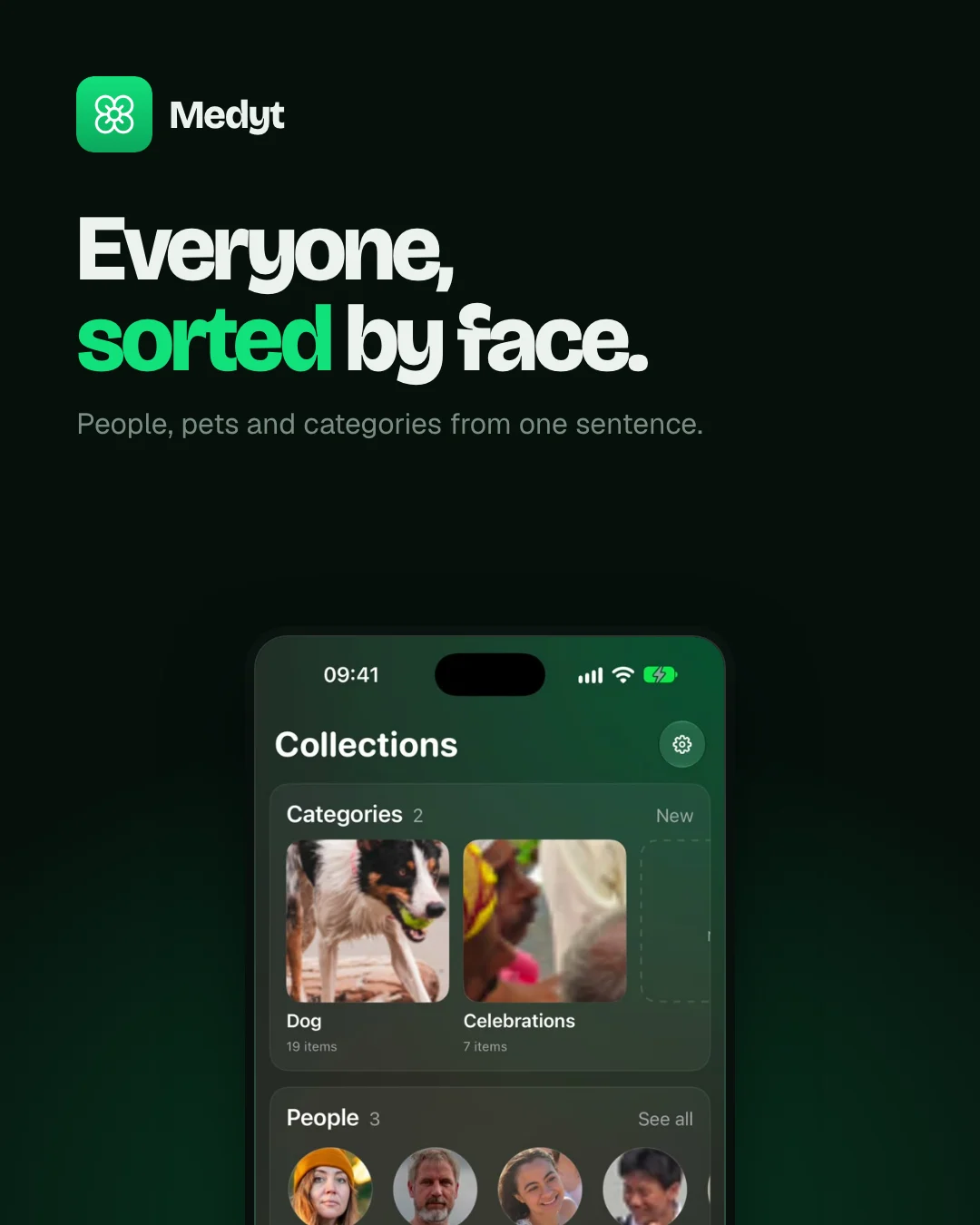
First, the phone has to understand the pictures. A set of small recognition models runs on the device and writes down what it sees: who is in each photo (faces become numbers, and the same face lands in the same group), which pet, which objects, what kind of scene, what colour the jacket is, whether the picture is blurry. All of that goes into a small database on the phone.
Second, the phone has to understand you. Your sentence becomes a handful of steps, a search against that database, and the planner doing that is Apple Intelligence, which is already on the phone.
What was hard
Choosing small. The research folder in the repo exists for one reason: every model had to earn its place. I tested the planner candidates on the same set of requests. Apple's built-in model scored 25 out of 40, the best small alternative 13, and it adds nothing to the download. That decided it.
An assistant that must not guess. "Black jacket" should never return a white one. So search is strict: every word has to match a label the models actually found. It sometimes returns less than you hoped. I'll take that over a confident wrong answer, especially when the next step might be deleting photos.
Two worlds. The ideas started in Python, where trying a model costs a few lines. The product is Swift and Core ML. Porting the pipeline meant the same behaviour in a different language, and the Mac build of the same app became the fast place to iterate on the assistant.
Where it is now
The iPhone app is built and on its way to the App Store. The demo site has the plans (a free tier, then Pro) and a privacy page that says what actually leaves the phone: nothing but the fact of a purchase.
If you want to see it, the demo site is the place. The code is private for now.